
Every time Sony takes a step that seems to move PlayStation further away from physical games, the internet catches fire. The same arguments come back: preservation, ownership, second-hand games, collections, the fear of everything depending on a digital store and, of course, calls for a boycott.
And to be clear from the start: I understand a lot of that reaction. I even share many of those concerns.
But here comes the uncomfortable part: you will not see me insulting Sony, announcing a boycott or treating this as if it were a personal attack. Because I think the debate around physical games has more grey areas than we are willing to admit.
I do not want physical games to disappear. What I want is a more honest conversation.
I am not exactly an enemy of physical games
I am 36, I have been playing games for almost my entire life and, even though my favorite platform has always been PC, I have owned a lot of consoles. I am not speaking from the outside, and I am not speaking from contempt for physical games.
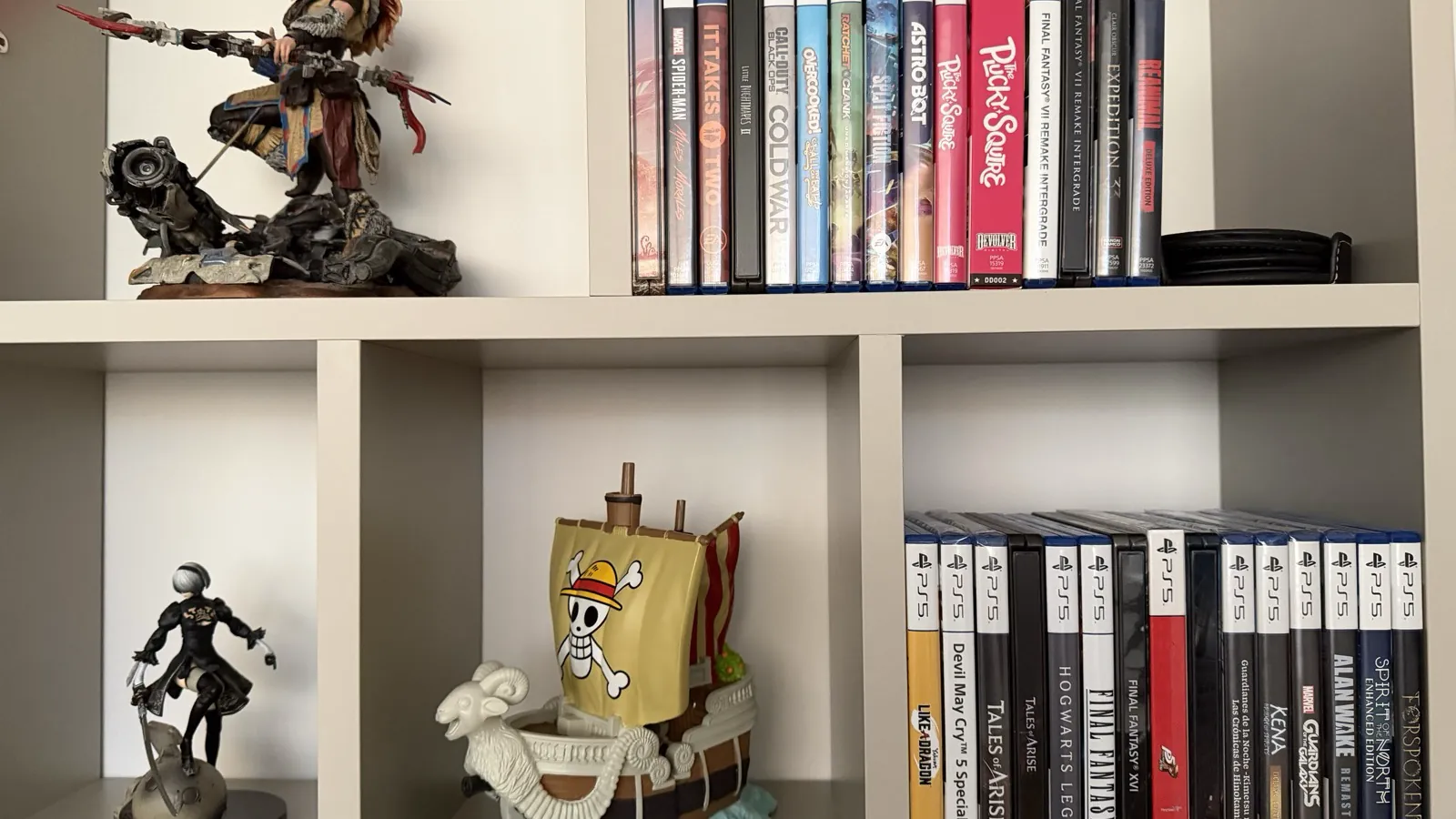
I have hundreds of games on my shelves. I still buy physical. Today, for example, I reserved Sword Art Online: Echoes of Aincrad. I have never sold a game or a console; they always become part of my personal collection.
In other words, I am not exactly the kind of player who celebrates the disappearance of boxes, discs or physical editions. I like them. I like seeing them. I like owning them. I like that they are part of my history as a player.
That is precisely why I feel a bit uncomfortable when the debate turns into something as simple as “Sony bad, players good”.
Buying physical also has its small inconveniences
There is a very unglamorous part of physical games that gets discussed less: sometimes they are simply more inconvenient.
It has happened to me with games I was really looking forward to. I reserve them so I can have them on launch day, but the digital version unlocks at midnight and the physical copy arrives the next morning, if everything goes well. And more than once I have ended up doing something pretty absurd: buying the digital version too so I could start playing from minute one, while the physical copy stayed sealed on the shelf.
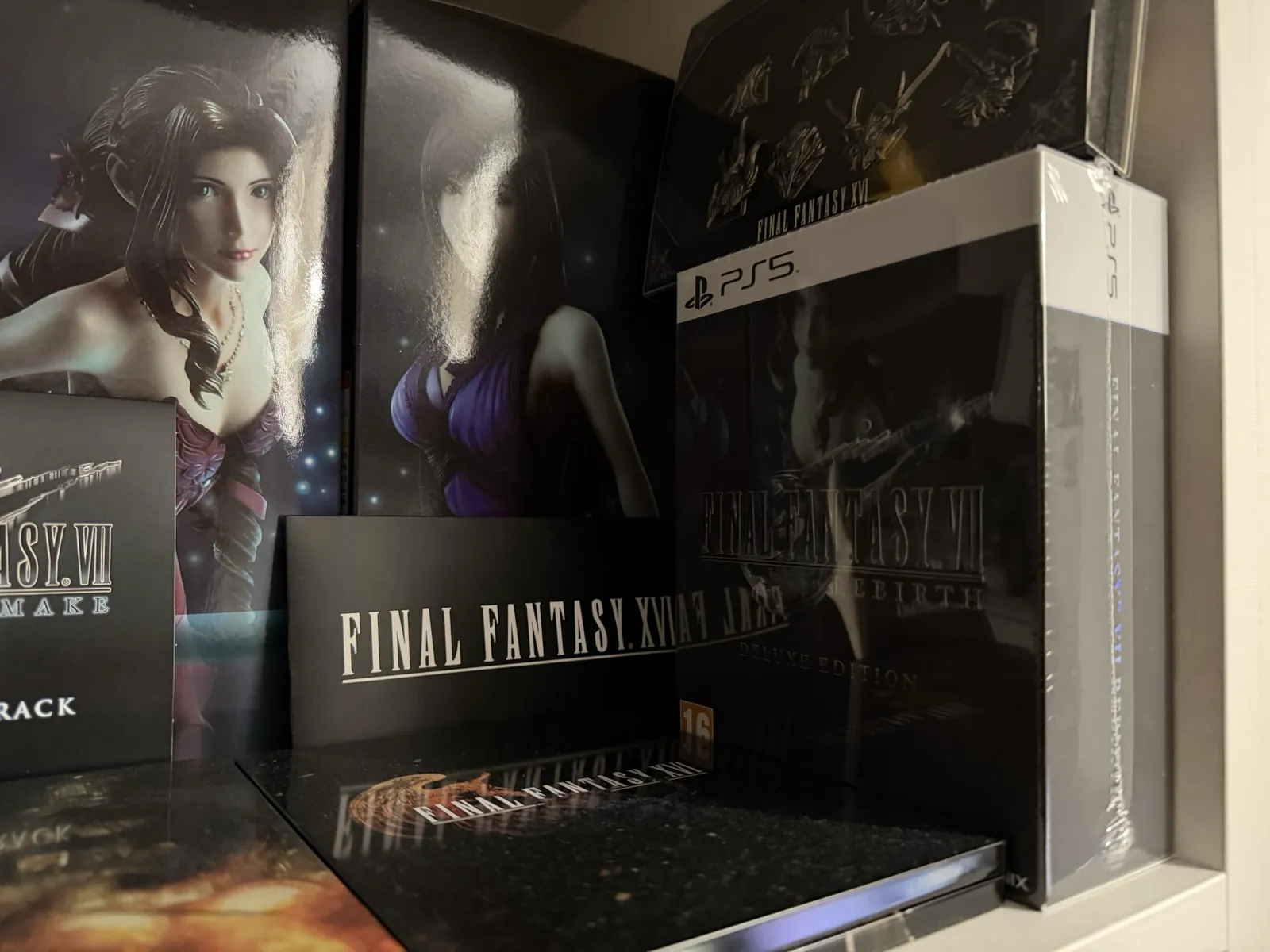
Sometimes I buy physical because I want to own it, even if I end up playing digitally first.
It is not a huge drama, obviously. It is a small detail, almost silly. But it is also part of the real experience of buying physical games today.
Digital has huge risks, especially when we are talking about closed ecosystems. But it also has very obvious advantages: convenience, instant availability, no shipping delays, no stock issues and access from the very first minute.
And that matters too.
I am not going to repeat every argument in favor of physical games
I do not want to spend this article listing every advantage of physical games, because many of those points have already been repeated endlessly and, besides, I agree with a lot of them.
Physical games have value as objects. They have value as a collection. They let you lend, sell, buy second-hand, gift, keep a tangible copy and build a library that does not depend only on an online account.
All of that matters to me.
The thing is, I believe the bad parts of digital will change over time. I do not think Sony, or any other platform, can simply do and undo whatever it wants if it becomes big enough. If it is small, then it will simply be an interesting option for a niche group of players and ignored by everyone else.
Second-hand games are good for players, but not always for the medium
Buying second-hand is legitimate. Selling your games too. Nobody should feel guilty for doing it. Everyone has their own financial situation, priorities and way of consuming entertainment.
But just because something is legitimate for the consumer does not mean it has no economic effects on the people who make games.
Let us imagine an extreme case: someone buys a PlayStation and, for several years, plays hundreds of games, all of them second-hand and all of them single-player.
What happens economically? Sony may have sold that console with a tiny margin or even at a loss, depending on the point in the hardware cycle. And none of the studios that made those games has received a single euro from those specific copies.
It is an extreme case, of course. It does not represent the majority. But it helps visualize something we usually avoid saying: second-hand games benefit the individual player enormously, but they do not always benefit the ecosystem that produces the games that player enjoys.
The real question is not whether second-hand games are good or bad. The interesting question is different: how many people buy second-hand because it is their only real way to access the hobby, and how many do it simply to save a bit of money even though they would buy new anyway?
If part of those purchases moved to first-hand sales, studios would receive more money. And if you like the games made by a studio, it is in your own selfish interest for that studio to keep existing.
This does not make second-hand games bad. But it does make the debate much more complicated than “physical good, digital bad”.
Piracy as an entry point, not a universal answer
I have also seen many people online argue that moves like this will only encourage piracy.
And here my position becomes uncomfortable again.
I have always understood piracy as an entry point for people who cannot afford the real cost. I am not scandalized by a kid with no money playing however they can. In fact, I was that kid.
For years I pirated almost everything. When I started having my own money, I stopped doing it and started buying. Not because I suddenly became a morally superior person, but because I could. And if I can pay for something that matters to me, I prefer to pay for it.
What I do not buy is turning piracy into a universal answer every time a company makes a decision we do not like.
One thing is understanding piracy as access when there is no real alternative. A very different thing is using it as moral punishment while still expecting studios to make games that are bigger, more expensive and more ambitious every time.
If Sony’s model does not convince you, I think it is perfectly fine not to buy its console. It is perfectly fine to move to PC. It is perfectly fine to support GOG, Steam, Nintendo, Xbox, a Steam Deck-like handheld or any other alternative.
But I do not think “then I will pirate” is a particularly brilliant answer when we are talking about adult consumers with the ability to pay.
Video game preservation does not depend only on physical games
Preservation matters to me. A lot, actually.
Video games are culture, technological memory, design, music, narrative, industry and collective experience. It would be absurd to treat them as disposable products with no historical value.
But my way of understanding preservation is quite far from the more purist position, the one that seems to want to solve everything through laws forcing companies to preserve every commercial product in a specific way.
I do not believe too much in that kind of obligation when we are talking about entertainment. There are areas where obligations are necessary because we are talking about essential things for human beings. Food. Healthcare. Basic rights. But PlayStation is not that. Video games are not that, no matter how much they matter to us.
That does not mean preservation does not matter. It means I believe more in archives, museums, institutions, private initiatives and specialized projects than in forcing by law every commercial product to exist forever under the conditions the consumer wants.
One example I like is GOG. Its preservation initiative goes exactly in that direction: recovering, maintaining and making old games accessible through a private initiative. In fact, I participate by paying a monthly subscription as a GOG Patron, because that form of preservation seems more realistic and useful to me than reducing everything to keeping boxes on a shelf.
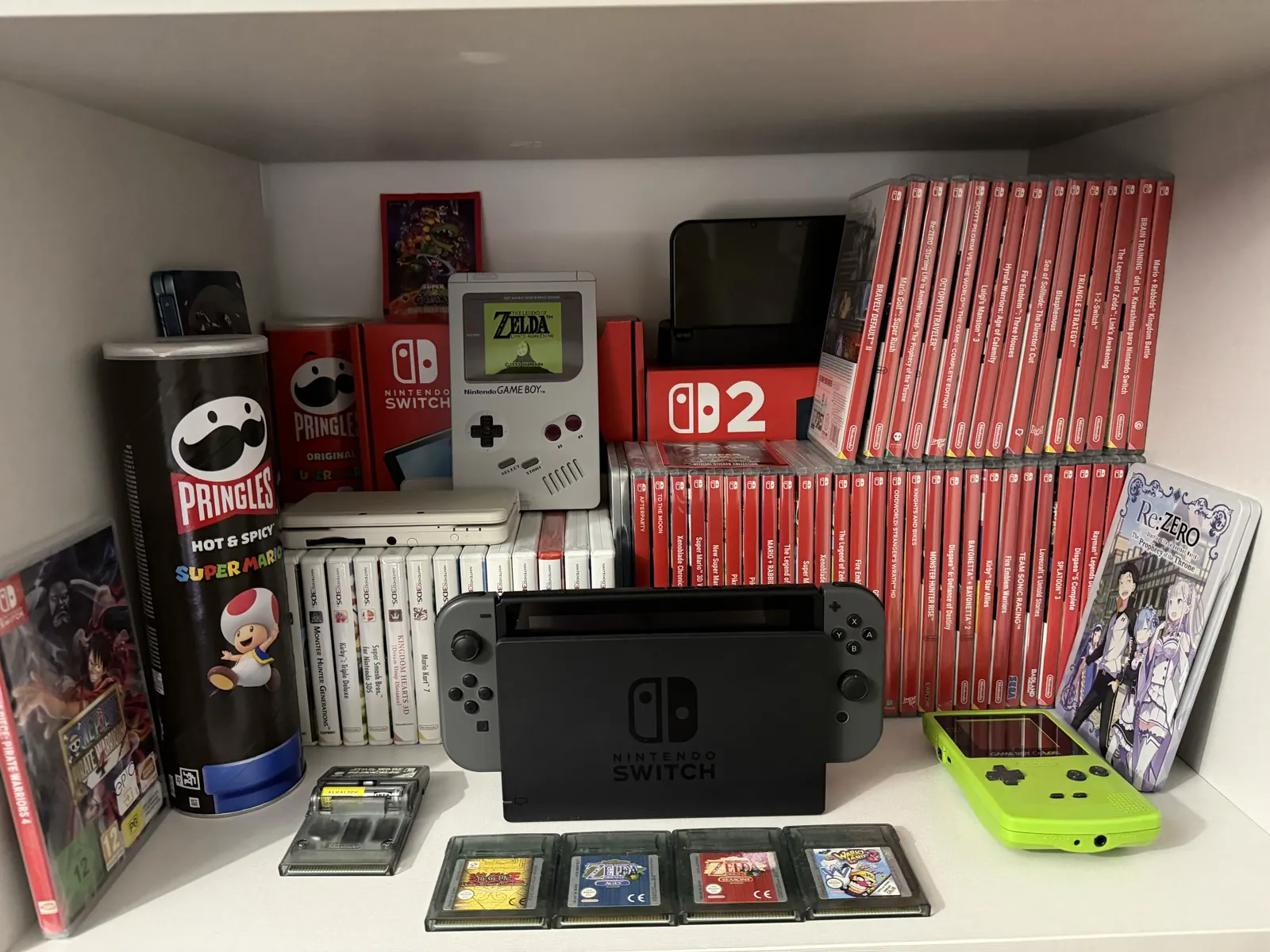
Besides, I have always found it strange to mix preservation and physical games as if they were almost the same thing.
A disc degrades. A box gets lost. A cartridge fails. A console stops working. A manual gets damaged. Keeping a physical product is not preserving a video game: it is keeping a commercial copy for an undefined amount of time.
Real preservation requires much more: documentation, compatibility, redundant copies, emulation, historical context, accessibility and maintenance.
The disappearance of physical games does not necessarily mean preservation has to get worse. It could get worse, yes. But it could also improve if the effort is directed toward more serious archival systems than piling up plastic in a room.
And I say that as someone who piles up quite a lot of plastic in a room.
Digital also avoids part of the speculation problem
One of the most repeated fears is that if everything becomes digital and Sony controls the store, prices will go up or there will be less competition.
That fear makes sense, especially if we are talking about a closed console where the PS Store becomes the only way to buy games. I am not going to pretend there is no real risk there.
But there is another side of prices that almost nobody talks about: physical games also have their own distortions.
When there are only a few units of a game, when an edition sells out or when a title becomes a cult item, prices can rise to absurd levels. And that does not happen digitally.
For collectors, scarcity can be part of the appeal. For a normal player who just wants to play, physical scarcity can be a nightmare.
There are games that become speculative objects physically while digitally they remain available at a reasonable price, or at least return to sales regularly. Digital removes part of that madness: there are no limited units, no inflated resale market, no need to pay three figures because you arrived late to a small print run.
Physical protects some things, yes. But digital protects others too: availability, infinite restocks, recurring sales and the absence of speculation caused by a lack of units.
Again, I am not saying one thing is perfect and the other is horrible. I am saying the debate has more sides.
Sony can be wrong, and maybe that is what we forget the most
There is also a lot of talk about Sony’s possible monopoly if PlayStation becomes a fully digital platform.
And here there is an important difference with PC. Steam is dominant, but PC is not Steam. You can buy from GOG, the Epic Games Store, Humble, itch.io, key stores, publisher launchers or directly from the developer. On PlayStation, if everything goes through the PS Store, Sony’s control would be much stronger.
That concern is legitimate.
That said, I am not so sure Sony can do whatever it wants without consequences. Sometimes we talk as if it were guaranteed that Sony can remove the disc drive, close the ecosystem even further, raise prices and still keep everyone.
But that is not guaranteed.
If a PlayStation without physical games does not convince people, many may simply not buy it. They may move to PC. They may stay on older generations. They may play on Nintendo. They may try a Steam Deck-like handheld. They may wait for sales. They may play fewer games at launch. They may change their habits.
Sony is not making risk-free decisions. It is making a business bet that can go well or badly.
And if the closed digital market really reached a level of control that was too high, I also do not think it is impossible that regulatory pressure would eventually push platforms to open up to more stores, just as we are already seeing in other technology sectors. I am not saying it will definitely happen, but I also do not buy the idea that Sony will be able to do literally anything without pressure from the market, regulators or competition.
PlayStation is not food or healthcare. It is entertainment. I may like or dislike what Sony does, but I do not think a company has to be forced to include a disc drive in an entertainment product if its commercial bet goes in another direction.
My freedom as a consumer is deciding whether that product interests me or not.
And “not buying” is not an empty phrase. It is literally the most powerful tool we have when we are talking about entertainment.
Defending physical games without turning them into a religion
I hope physical games continue to exist for many years. I say that as someone who buys physical, collects physical and enjoys seeing his games on the shelf.
But I do not want to defend physical games by turning them into a religion.
Physical games have huge advantages. They also have inconveniences, speculation, dependence on limited units and a relationship with preservation that is much weaker than we often admit.
Digital has obvious risks, especially in closed ecosystems. It also has real advantages for players: availability, convenience, instant access, constant sales and no physical scarcity.
That is why I find it hard to join the chant of “Sony bad, players good”. Reality is more uncomfortable.
And maybe that is exactly why it is worth talking about.
I am not defending the disappearance of physical games. I am not celebrating Sony pushing the market toward a more digital future. I am not saying people who are angry have no reason to be angry.
I am only saying that defending physical games should not force us to pretend that everything attached to them is perfect.
Second-hand games have huge advantages, but also economic effects. Piracy can be understandable in some contexts, but it cannot become an automatic response. Preservation is not solved by keeping discs. Digital prices can be dangerous, but physical scarcity also punishes players. And Sony can make decisions we dislike without that necessarily being a personal attack against us.
And I have not even gone into DRM. But it is funny, or at least curious, that you can have a game as real ownership when you buy it on GOG and next to it a physical copy of that same game that does not include it and is only a disc that requires an internet connection. This conversation has so many layers.
If the new model does not convince people, the answer is simple: do not buy it.
The market will eventually tell us whether Sony moved too early, whether it miscalculated or whether, whether we like it or not, most players are more ready to abandon physical games than we say on social media.
But I am not going to pretend this conversation is as simple as “Sony bad, players good”.